aster.cloud aster.cloud
  • /
  • Platforms
    • Public Cloud
    • On-Premise
    • Hybrid Cloud
    • Data
  • Architecture
    • Design
    • Solutions
    • Enterprise
  • Engineering
    • Automation
    • Software Engineering
    • Project Management
    • DevOps
  • Programming
    • Learning
  • Tools
  • About
  • /
  • Platforms
    • Public Cloud
    • On-Premise
    • Hybrid Cloud
    • Data
  • Architecture
    • Design
    • Solutions
    • Enterprise
  • Engineering
    • Automation
    • Software Engineering
    • Project Management
    • DevOps
  • Programming
    • Learning
  • Tools
  • About
aster.cloud aster.cloud
  • /
  • Platforms
    • Public Cloud
    • On-Premise
    • Hybrid Cloud
    • Data
  • Architecture
    • Design
    • Solutions
    • Enterprise
  • Engineering
    • Automation
    • Software Engineering
    • Project Management
    • DevOps
  • Programming
    • Learning
  • Tools
  • About
  • Engineering
  • Technology

From Your Device To Google Cloud API: Networking Basics

  • aster.cloud
  • March 7, 2022
  • 3 minute read

In this post we’ll look at some networking touchpoints that occur when you decide to access a Google Cloud API and build in the cloud environment. When you’re exploring Google Cloud, whether it’s via (Cloud SDK, Cloud Console, or Infrastructure as Code (IaC) tool), one of the first things you’ll do is try to connect to an API. To start that process, you’ll need a network connection.

The initial connectivity available would depend on where you are connecting from and what device you’re using. Your connection request has to go from point A (being your device) to point B (the Google API) where authentication happens to allow access. In your home or your Enterprise network this involves a series of steps, possibly multiple connection mediums (ethernet or wireless) and several nexthops (router connection points your traffic traverses on its journey). It’s all an intricate synergy of DNS, IPV4, IPV6, routing protocols, NAT, firewalls and more.


Partner with aster.cloud
for your next big idea.
Let us know here.


From our partners:

CITI.IO :: Business. Institutions. Society. Global Political Economy.
CYBERPOGO.COM :: For the Arts, Sciences, and Technology.
DADAHACKS.COM :: Parenting For The Rest Of Us.
ZEDISTA.COM :: Entertainment. Sports. Culture. Escape.
TAKUMAKU.COM :: For The Hearth And Home.
ASTER.CLOUD :: From The Cloud And Beyond.
LIWAIWAI.COM :: Intelligence, Inside and Outside.
GLOBALCLOUDPLATFORMS.COM :: For The World's Computing Needs.
FIREGULAMAN.COM :: For The Fire In The Belly Of The Coder.
ASTERCASTER.COM :: Supra Astra. Beyond The Stars.
BARTDAY.COM :: Prosperity For Everyone.

As you can see from the very get-go, networking is involved, even if the tooling hides much of its complexity. On the Google end there needs to be a reliable API endpoint that is available for whenever a customer wishes to connect. These APIs are built on Google’s planet scale network currently comprising 29 cloud regions and 88 zones. The Google private backbone is built on a robust fiber, low latency network which ensures excellent performance.
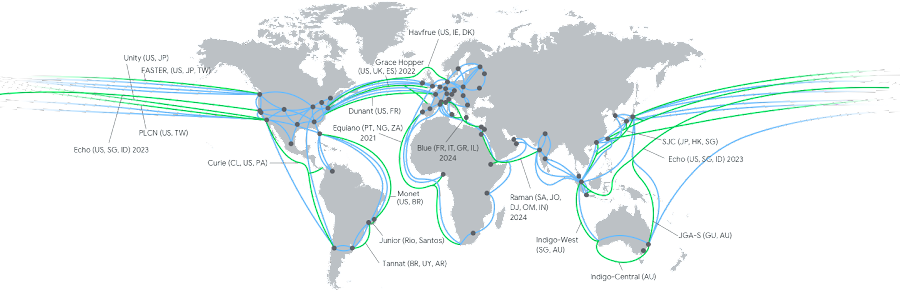
 

Drilling down a bit further, when a customer decides to adopt Google Cloud, the organization has to be on-boarded into the cloud. This comprises setting up the environment, billing, IAM, networking, security and more. There are several options to help you get started (Google Cloud Setup Checklist, Cloud Foundation Toolkit)
From a networking point of view, when a new project is created in your environment it automatically creates a default Virtual Private Cloud (VPC). A VPC is a virtual representation of a physical on-prem environment. In Google Cloud VPC are global and networks are regional. For administrative and other purposes you can disable the automatic creation of the default VPC when a project is created by using the Organizational Constraint policy constraints/compute.skipDefaultNetworkCreation.
You can design your VPC with the following network modes:

  • Auto mode network; The default network which is created when a new project is created is an example of an auto mode network. You can also select an auto network manually when configuring your environments.
  • Custom mode networks; These allow you full control over all configuration.
Read More  Bard Gets Its Biggest Upgrade Yet With Gemini

The networking and routing which occurs within the GCP environment is all software defined and includes several capabilities similar to on-prem environments, including firewalls, DNS, DHCP, NAT, Router, VPN, load balancers, private networks (RFC1918), public IP addresses just to name a few.

If we look at microservice-focused environments like Google Kubernetes Engine (GKE), we also have a bit of networking involved. In GKE all Services, Nodes, containers and Pods are assigned IP addresses. These IP addresses are assigned from various address pools, and for Nodes, containers and pods they are ephemeral. Outside of the default address assignment there are a few options to customize your addressing, like flexible pods CIDR and multi pod CIDR.

For services in GKE you are assigned a stable IP address. Examples of common services are ClusterIP, NodePort, LoadBalancer, ExternalName and Headless. Ingress allows you to expose your application for HTTP(S) traffic and can be configured for internal and external cases. As you can see there are quite a few points where networking is involved in GKE and other services.

Without going into an exhaustive list of networking functionality in GCP you can be certain that your experience is backed by a very strong world class network with premium and standard tier service. Remember, networking is a core component in your cloud experience even if it’s not obvious to you.

To learn more about Google Cloud networking check the following links:

  • Explore Networking in Google Cloud today.
  • Also check out A year in review: Advancements in infrastructure at Google Cloud

Want to ask a question, find out more or share a thought? Please connect with me on Twitter or  Linkedin and send me a message.

Read More  CISO Perspectives: June 2022


By: Ammett Williams (Developer Relations Engineer)
Source: Google Cloud Blog


For enquiries, product placements, sponsorships, and collaborations, connect with us at [email protected]. We'd love to hear from you!

Our humans need coffee too! Your support is highly appreciated, thank you!

aster.cloud

Related Topics
  • Cloud API
  • Developers
  • Google Cloud
  • Infrastructure
You May Also Like
View Post
  • Technology

IBM Study: One in Four Malicious Breaches are AI-Enabled, Costing Companies $6 Million on Average

  • July 29, 2026
View Post
  • Technology

3 Questions: Neural transparency and the future of AI design

  • July 17, 2026
View Post
  • Technology

IBM and Red Hat Expand Lightwell with New Offerings to Build the Trust Infrastructure for AI-Era Open Source

  • July 8, 2026
View Post
  • Technology

The AI investment surge hasn’t produced the expected results yet. That could change in 2026

  • June 26, 2026
zedreviews-valerion
View Post
  • Gears
  • Technology

Father’s Day Outdoors – Build Dad the Ultimate Backyard Watch Party

  • June 20, 2026
zedreviews-fathers-day-50830
View Post
  • Gears
  • Technology
  • Tools

Father’s Day Outdoors, Round Two – Gear for the Action, the Tailgate, and Beating the Heat

  • June 20, 2026
zedreviews-fathers-day-2147684744
View Post
  • Gears
  • Technology
  • Tools

The Ultimate Father’s Day Gift Guide – Home Entertainment Upgrades Dad Actually Wants

  • June 20, 2026
zedreviews-fathers-day-21306
View Post
  • Gears
  • Technology

A Father’s Day Gift Guide for Every Dad – Timepieces and Travel Gear

  • June 20, 2026

Stay Connected!
LATEST
  • 1
    IBM Study: One in Four Malicious Breaches are AI-Enabled, Costing Companies $6 Million on Average
    • July 29, 2026
  • 2
    Accelerating the frontiers of scientific discovery: Google’s $40M commitment to the Genesis Mission
    • July 26, 2026
  • 3
    3 Questions: Neural transparency and the future of AI design
    • July 17, 2026
  • 4
    Intel Invests €5 Billion to Expand Manufacturing in Europe
    • July 13, 2026
  • 5
    IBM and Red Hat Expand Lightwell with New Offerings to Build the Trust Infrastructure for AI-Era Open Source
    • July 8, 2026
  • 6
    When I Was Young
    • July 4, 2026
  • 7
    The Fastest AI Fried Chicken In The World
    • June 29, 2026
  • 8
    Zed Approves | How to Stay Cool in Extreme Heat
    • June 29, 2026
  • 9
    The AI investment surge hasn’t produced the expected results yet. That could change in 2026
    • June 26, 2026
  • 10
    Zed Approves | It’s Prime Day 2026! Time to Upgrade Your World Cup Viewing Setup and Beat the Heat
    • June 25, 2026
about
Hello World!

We are aster.cloud. We’re created by programmers for programmers.

Our site aims to provide guides, programming tips, reviews, and interesting materials for tech people and those who want to learn in general.

We would like to hear from you.

If you have any feedback, enquiries, or sponsorship request, kindly reach out to us at:

[email protected]
Most Popular
  • 1
    Zed Approves | The Best Prime Day PC Deals: Top Gaming Rigs, Workstations, and Everyday Laptops
    • June 24, 2026
  • neon-cart 2
    Zed Approves: How to Gear Up for GTA 6 This Amazon Prime Day (2026 Quick Guide)
    • June 22, 2026
  • zedreviews-valerion 3
    Father’s Day Outdoors – Build Dad the Ultimate Backyard Watch Party
    • June 20, 2026
  • zedreviews-fathers-day-50830 4
    Father’s Day Outdoors, Round Two – Gear for the Action, the Tailgate, and Beating the Heat
    • June 20, 2026
  • zedreviews-fathers-day-2147684744 5
    The Ultimate Father’s Day Gift Guide – Home Entertainment Upgrades Dad Actually Wants
    • June 20, 2026
  • /
  • Technology
  • Tools
  • About
  • Contact Us

Input your search keywords and press Enter.