With advanced computational methods, the companies scanned billions of detections, discovering within weeks as many asteroids as were found worldwide in an entire year
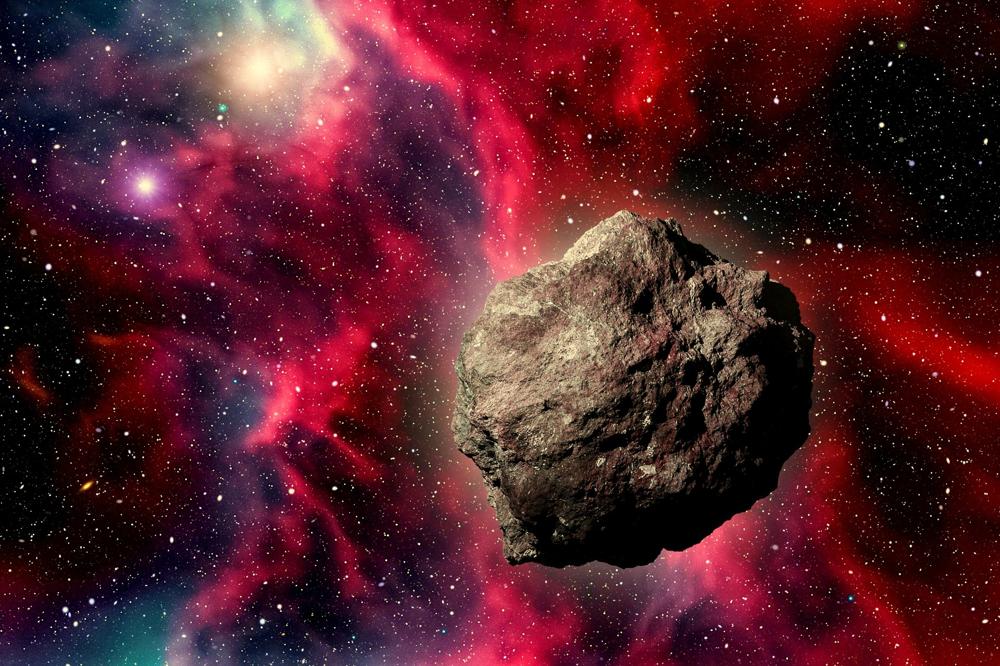
MILL VALLEY, Calif. and SUNNYVALE, Calif., April 30, 2024 /PRNewswire/ — Asteroid Institute, a program of B612 Foundation, and Google Cloud today announced the most significant results of their partnership to date: identifying 27,500 new, high-confidence asteroid discovery candidates. The work, which took place over several weeks, has the potential to enable the mapping of the solar system and protect the Earth from collisions, advancing the field of minor planet discovery.
From our partners:

The project was done without the benefit of new observations of the sky, but rather by leveraging Google Cloud technology to run sophisticated algorithms developed by Asteroid Institute and University of Washington researchers, and by mining historical datasets from the NOIRLab Source Catalog Data Release 2 (NSC DR2). The majority of the new discoveries are Main Belt Asteroids that orbit the Sun between Mars and Jupiter, but Asteroid Institute also discovered more than 100 Near-Earth Asteroids whose orbits take them much closer towards Earth.
In partnership with the University of Washington’s DiRAC Institute, Asteroid Institute developed a novel algorithm called Tracklet-less Heliocentric Orbit Recovery (THOR), which runs on a cloud-based, open-source astrodynamics platform called Asteroid Discovery Analysis and Mapping (ADAM). THOR projects theoretical orbits across millions of observed moving points of light and links together those points that are consistent with real physical orbits. Google Cloud’s Office of the CTO collaborated with Asteroid Institute to help it scale and tune its algorithms on ADAM using Google Cloud.
Asteroid Institute selected Google Cloud as its cloud provider of choice due to its scalability, ease of use, and state-of-the art data and AI products, specifically focused on:
- Scalable and high-performance scientific computing: Asteroid Institute uses Google Kubernetes Engine (GKE), a managed Kubernetes service to deploy and operate containerized applications at scale, to execute massive computational workloads of millions of vCPU hours to discover asteroids and predict their movements in the solar system.
- Managing large datasets: 5.4 billion observations from different astronomical surveys, which represent potential asteroids and other objects, are stored and analyzed in BigQuery, Google’s unified AI-ready data platform. Thanks to its serverless nature, Asteroid Institute’s system can easily manage the influx of data that this complex process generates.
- Large-scale image storage: Asteroid Institute leverages Google Cloud Storage for millions of images from NOIRLab to use in verification of asteroid discoveries, as well as durable storage for billions of data points across the asteroid discovery pipeline.
“What is exciting is that we are using electrons in data centers, in addition to the usual photons in telescopes, to make astronomical discoveries,” said Dr. Ed Lu, Executive Director, Asteroid Institute.
Asteroid Institute is also exploring the use of Google’s AI technologies to automatically vet and verify candidate images identified by the THOR algorithm. AI automation will be a critical step to scale this work further, because the initial verification of likely candidates is a major bottleneck—currently conducted manually by volunteer high school students, undergraduate and postgraduate students, scientists, and astronomers. If successful, human verification needs may be reduced significantly and the pipelines built for NOIRLab can be adapted to run on much larger datasets, such as ones from the Vera C. Rubin Observatory, boosting new discoveries even further.
“At Google, we always like hard computational challenges, and Asteroid Institute provided us with complex unstructured data that required heavy computational processing, large tracking requirements and novel AI capabilities,” said Massimo Mascaro, Technical Director, Google Cloud’s Office of the CTO. “We’re proud to partner with Asteroid Institute to help further scientific discovery and expand our world’s awareness of the beautiful neighbors we have in our solar system.”
The NSC DR2 catalog is the first of many Asteroid Institute plans to scan. The largest will likely become available in 2025, after the commissioning of the Vera C. Rubin Observatory. With THOR running on ADAM on Google Cloud—and with the help of AI—researchers can scale this work and scan new datasets more efficiently and effectively as they become available. Asteroid Institute’s goal is to automate this process to the benefit of the astronomical community and space industry.
“Asteroid Institute results are more than exciting for the Vera C. Rubin Observatory: they may help us reoptimize our observing strategy and obtain gains for some science programs, such as cosmologically important supernovae explosions, equivalent to cloning another Rubin observatory,” said Dr. Zeljko Ivezic, Rubin Observatory Construction Director.
Asteroid Institute and Google Cloud have partnered since 2017 with the goal of transforming asteroid discovery. Learn more about the technology that made this discovery possible here.
About B612 Foundation and Asteroid Institute
Asteroid Institute brings together scientists, researchers, and engineers to develop tools and technologies to understand, map, and navigate our solar system. A program of B612 Foundation, Asteroid Institute leverages advances in computer science, instrumentation, and astronomy to find and track asteroids. Since 2002, the foundation has supported research and technologies to enable the economic development of space and enhance our understanding of the evolution of our solar system in addition to supporting educational programs, including Asteroid Day and the new Schweickart Prize. Founding Circle and Asteroid Circle members, and individual donors from 46 countries provide financial support for the work. For more information, visit B612foundation.org or follow on social: Twitter, Facebook, YouTube, and LinkedIn.
About Google Cloud
Google Cloud is the new way to the cloud, providing AI, infrastructure, developer, data, security, and collaboration tools built for today and tomorrow. Google Cloud offers a powerful, fully integrated and optimized AI stack with its own planet-scale infrastructure, custom-built chips, generative AI models and development platform, as well as AI-powered applications, to help organizations transform. Customers in more than 200 countries and territories turn to Google Cloud as their trusted technology partner.
Source: cyberpogo.com
For enquiries, product placements, sponsorships, and collaborations, connect with us at [email protected]. We'd love to hear from you!
Our humans need coffee too! Your support is highly appreciated, thank you!