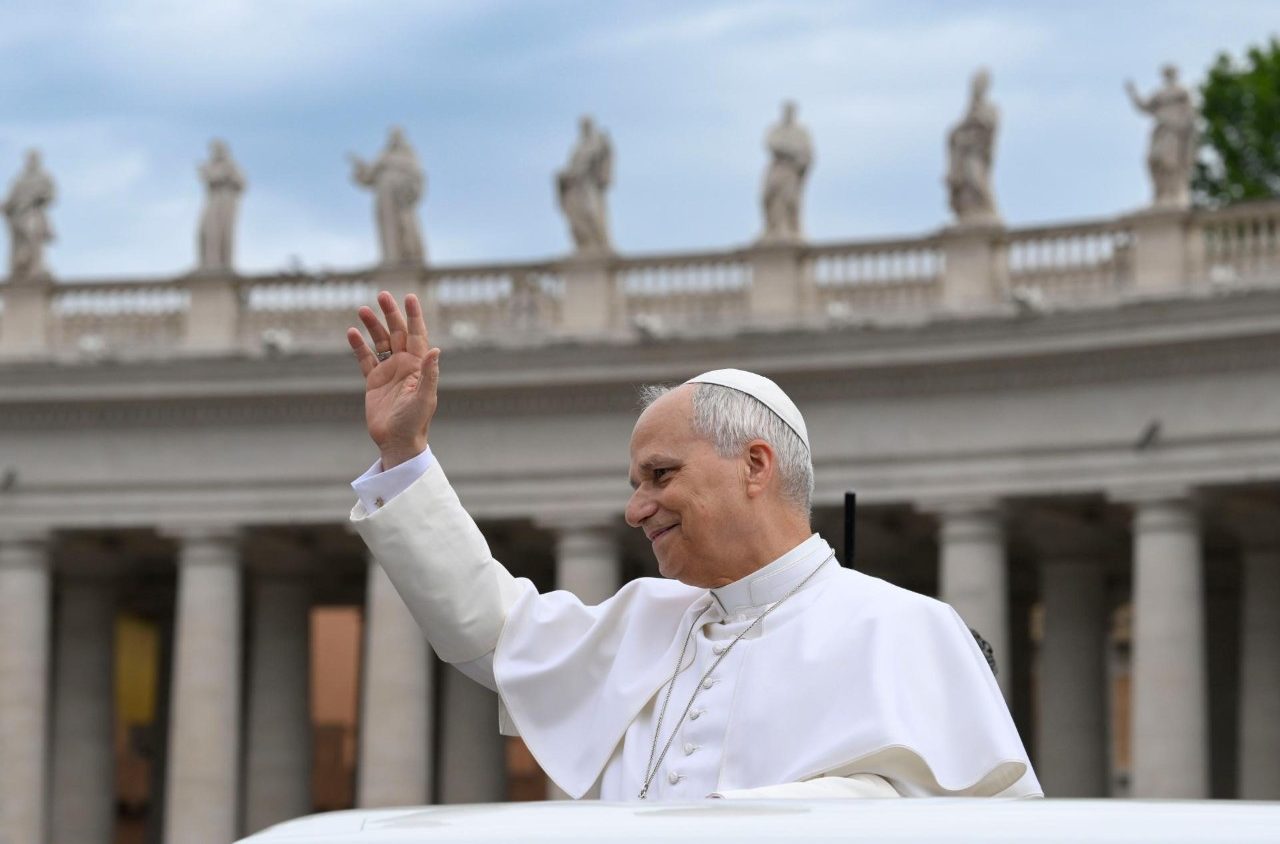
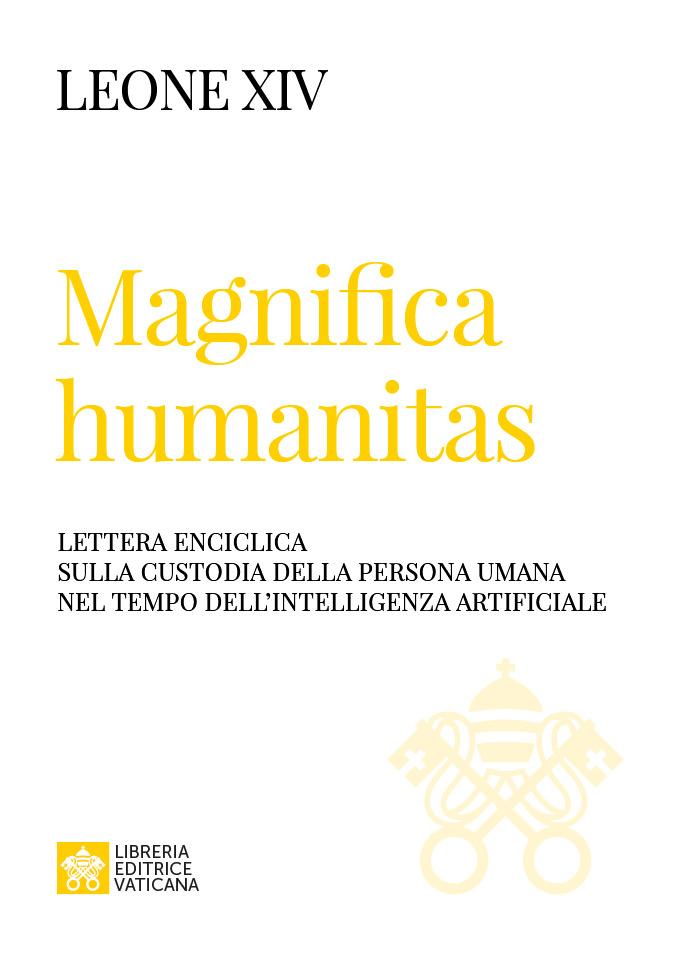
Pope Leo XIV’s first encyclical, Magnifica Humanitas (“Magnificent Humanity”), will be published on 25 May, addressing artificial intelligence and the protection of human dignity, the Vatican has announced.
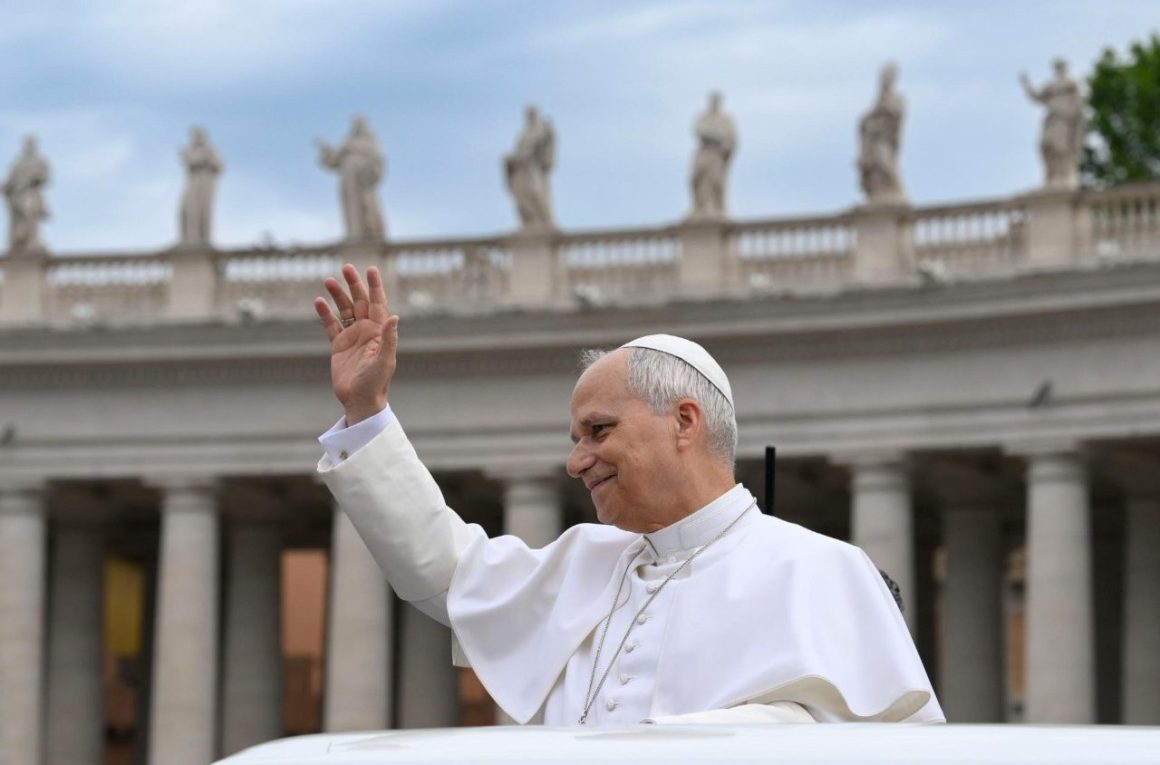
The document, signed by the Pope on 15 May – the 135th anniversary of Rerum Novarum, Pope Leo XIII’s foundational 1891 social encyclical on labour and capital written during the first Industrial Revolution – will be presented at a Vatican press conference on the day of its release.
From our partners:
In an unprecedented first, Pope Leo XIV will be present in person at the Vatican’s Synod Hall for the 11:30 a.m. local time event, alongside a tech founder from one of the world’s fastest growing AI companies. Christopher Olah, co-founder of Anthropic – which developed the AI large language model Claude – will speak on a panel presenting the document. Also joining the panel will be Professor Anna Rowlands, a British theologian specialising in Catholic social teaching who helped organise the Synod on Synodality, and Professor Léocadie Lushombo, a professor of theological ethics at the Jesuit School of Theology at Santa Clara University in California.
Cardinal Víctor Manuel Fernández, Prefect of the Dicastery for the Doctrine of the Faith, and Cardinal Michael Czerny, Prefect of the Dicastery for Integral Human Development, will also take part. Cardinal Secretary of State Pietro Parolin will offer closing remarks, followed by an address and blessing by Pope Leo XIV.
A modern response to a new industrial revolution
Pope Leo XIV has expressed interest in the issue of AI and the dignity of work since the first week of his pontificate, telling the College of Cardinals days after his election in May 2025 that he took his papal name partly in honour of Pope Leo XIII. “In our own day, the Church offers to everyone the treasury of her social teaching in response to another industrial revolution and to developments in the field of artificial intelligence that pose new challenges for the defence of human dignity, justice and labour,” Pope Leo XIV said two days after his election.
Pope warns AI must serve humanity – not replace it
The first American Pope and a former mathematics major, Pope Leo has returned to the subject of AI repeatedly in his first year, leading Time magazine to include him on its 2025 list of the world’s most influential people in artificial intelligence, describing him as a spiritual counterweight to Silicon Valley. He has addressed AI in venues ranging from a sports stadium packed with teenagers – whom he told to use AI “in such a way that if it disappeared tomorrow, you would still know how to think” – to a gathering of legislators from 68 countries, where he insisted that AI is a tool meant to serve human beings, not replace them. The Pope has also warned priests not to use chatbots to write their homilies and expressed concern for AI’s potential effect on children’s “intellectual and neurological development”.
Protecting creativity, relationships and human dignity
The Pope’s 2026 message for the 60th World Day of Social Communications, published in January, has been his most robust document on AI and protecting human dignity to date. In that message, he underlined that “our faces and voices are unique, distinctive features of every person” that reveal “a person’s own unrepeatable identity” and that by “simulating human voices and faces, wisdom and knowledge, consciousness and responsibility, empathy and friendship,” AI systems “encroach upon the deepest level of communication, that of human relationships.” He also warned that AI systems “have increasingly taken control of the production of texts, music and videos,” putting “much of the human creative industry at risk of being dismantled and replaced with the label ‘Powered by AI,’ turning people into passive consumers of unthought thoughts and anonymous products without ownership or love.”
Teaching young people to seek truth beyond technology
“The ability to access vast amounts of data and information should not be confused with the ability to derive meaning and value from it. The latter requires a willingness to confront the mystery and core questions of our existence,” Pope Leo said in a December speech to participants in an AI conference. “It will therefore be essential to teach young people to use these tools with their own intelligence, ensuring that they open themselves to the search for truth.”
Originally published at: news.liwaiwai.com
For enquiries, product placements, sponsorships, and collaborations, connect with us at [email protected]. We'd love to hear from you!
Our humans need coffee too! Your support is highly appreciated, thank you!