aster.cloud aster.cloud
  • /
  • Platforms
    • Public Cloud
    • On-Premise
    • Hybrid Cloud
    • Data
  • Architecture
    • Design
    • Solutions
    • Enterprise
  • Engineering
    • Automation
    • Software Engineering
    • Project Management
    • DevOps
  • Programming
    • Learning
  • Tools
  • About
  • /
  • Platforms
    • Public Cloud
    • On-Premise
    • Hybrid Cloud
    • Data
  • Architecture
    • Design
    • Solutions
    • Enterprise
  • Engineering
    • Automation
    • Software Engineering
    • Project Management
    • DevOps
  • Programming
    • Learning
  • Tools
  • About
aster.cloud aster.cloud
  • /
  • Platforms
    • Public Cloud
    • On-Premise
    • Hybrid Cloud
    • Data
  • Architecture
    • Design
    • Solutions
    • Enterprise
  • Engineering
    • Automation
    • Software Engineering
    • Project Management
    • DevOps
  • Programming
    • Learning
  • Tools
  • About
  • Big Data
  • Data

COVID-19 Public Dataset Program: Making Data Freely Accessible For Better Public Outcomes

  • aster.cloud
  • March 31, 2020
  • 2 minute read

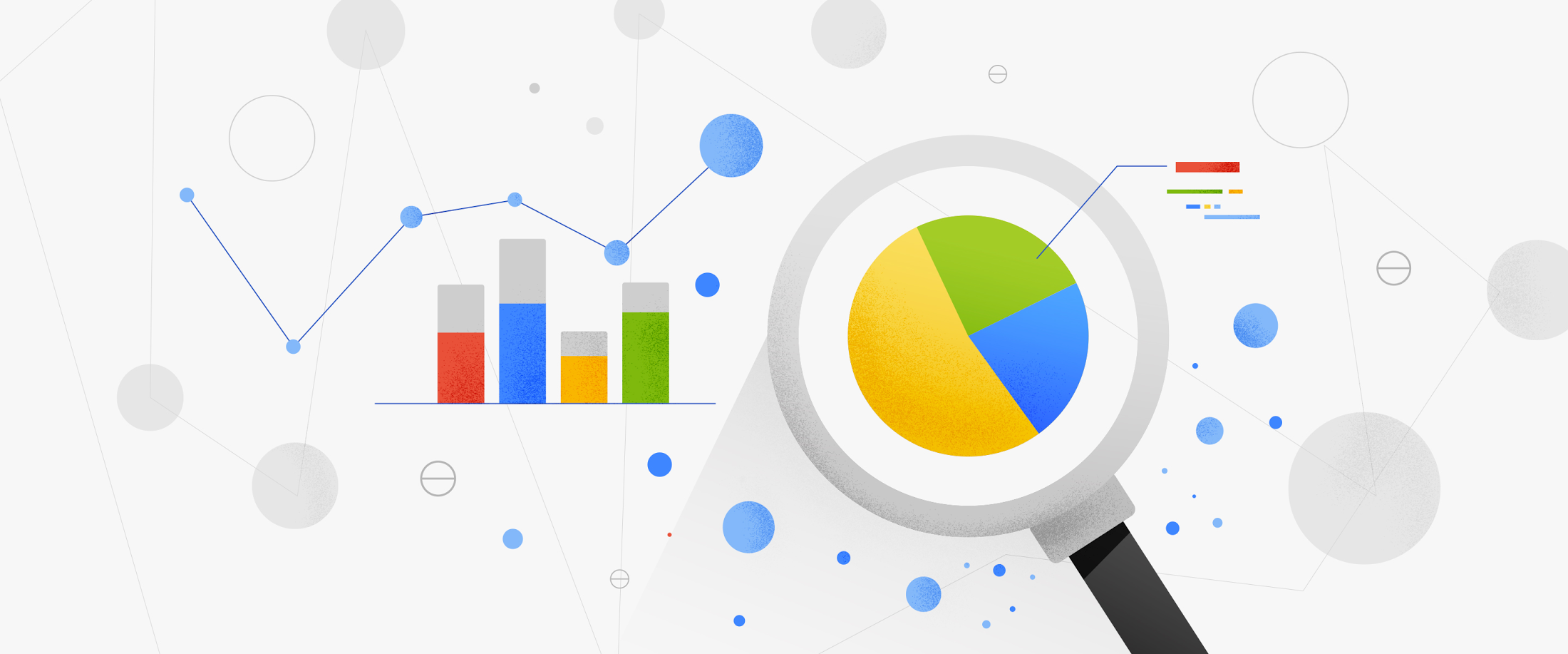
Data always plays a critical role in the ability to research, study, and combat public health emergencies, and nowhere is this more true than in the case of a global crisis. Access to data sets—and tools that can analyze that data at cloud scale—are increasingly essential to the research process, and are particularly necessary in the global response to the novel coronavirus (COVID-19).

To aid researchers, data scientists, and analysts in the effort to combat COVID-19, we are making a hosted repository of public datasets, like Johns Hopkins Center for Systems Science and Engineering (JHU CSSE), the Global Health Data from the World Bank, and OpenStreetMap data, free to access and query through our COVID-19 Public Dataset Program. Researchers can also use BigQuery ML to train advanced machine learning models with this data right inside BigQuery at no additional cost.


Partner with aster.cloud
for your next big idea.
Let us know here.


From our partners:

CITI.IO :: Business. Institutions. Society. Global Political Economy.
CYBERPOGO.COM :: For the Arts, Sciences, and Technology.
DADAHACKS.COM :: Parenting For The Rest Of Us.
ZEDISTA.COM :: Entertainment. Sports. Culture. Escape.
TAKUMAKU.COM :: For The Hearth And Home.
ASTER.CLOUD :: From The Cloud And Beyond.
LIWAIWAI.COM :: Intelligence, Inside and Outside.
GLOBALCLOUDPLATFORMS.COM :: For The World's Computing Needs.
FIREGULAMAN.COM :: For The Fire In The Belly Of The Coder.
ASTERCASTER.COM :: Supra Astra. Beyond The Stars.
BARTDAY.COM :: Prosperity For Everyone.

“Making COVID-19 data open and available in BigQuery will be a boon to researchers and analysis in the field,” says Sam Skillman, Head of Engineering at Descartes Labs. “In particular, having queries be free will allow greater participation, and the ability to quickly share results and analysis with colleagues and the public will accelerate our shared understanding of how the virus is spreading.”

These datasets remove barriers and provide access to critical information quickly and easily, eliminating the need to search for and onboard large data files. Researchers can access the datasets from within the Google Cloud Console, along with a description of the data and sample queries to advance research. All data we include in the program will be public and freely available. The program will remain in effect until September 15, 2020.

Read More  Google I/O 2019 | Art and Technology Experiments with Google Arts and Culture

“Developing data-driven models for the spread of this infectious disease is critical,” said Matteo Chinazzi, Associate Research Scientist, Northeastern University. “Our team is working intensively to model and better understand the spread of the COVID-19 outbreak. By making COVID-19 data open and available in BigQuery, researchers and public health officials can better understand, study, and analyze the impact of this disease.”

The contents of these datasets are provided to the public strictly for educational and research purposes only. We are not onboarding or managing PHI or PII data as part of the COVID-19 Public Dataset Program. Google has practices and policies in place to ensure that data is handled in accordance with widely recognized patient privacy and data security policies.

The Google Cloud team sincerely hope that the COVID-19 Public Dataset Program will enable better and faster research to combat the spread of this disease. Get started today.


Chad W. Jennings & Shane Glass

Source: Google Cloud Blog


For enquiries, product placements, sponsorships, and collaborations, connect with us at [email protected]. We'd love to hear from you!

Our humans need coffee too! Your support is highly appreciated, thank you!

aster.cloud

Related Topics
  • BigQuery ML
  • BigQuery;
  • Coronavirus
  • COVID-19
  • Dataset
  • google
  • Google Cloud
You May Also Like
View Post
  • Data
  • Technology

Synthetic data could ease people’s concerns about privacy breaches. But who gets to create it?

  • September 15, 2026
Data center
View Post
  • Data
  • Public Cloud

Data Sovereignty in Spain. It’s Not Just About the Law, It’s About Efficiency

  • June 3, 2026
View Post
  • Data
  • Platforms
  • Technology

Scaling cloud and AI: Microsoft Azure’s commitment to Europe’s digital future

  • May 11, 2026
View Post
  • Data

Streamline read scalability with Cloud SQL autoscaling read pools

  • March 23, 2026
View Post
  • Data
  • Platforms
  • Public Cloud

PayPal’s historically large data migration is the foundation for its gen AI innovation

  • March 4, 2026
View Post
  • Data
  • Technology

3 obstacles to agentic AI adoption and how to overcome them

  • December 22, 2025
Getting things done makes her feel amazing
View Post
  • Computing
  • Data
  • Featured
  • Learning
  • Tech
  • Technology

Nurturing Minds in the Digital Revolution

  • April 25, 2025
View Post
  • Data
  • Engineering

Hiding in Plain Site: Attackers Sneaking Malware into Images on Websites

  • January 16, 2025

Stay Connected!
LATEST
  • 1
    Synthetic data could ease people’s concerns about privacy breaches. But who gets to create it?
    • September 15, 2026
  • 2
    Apple Flagship Hardware Launch for September 2026
    • September 10, 2026
  • 3
    Multi-cloud with AWS and Azure just got a whole lot easier thanks to a new interconnect service
    • September 2, 2026
  • 4
    VMware targets ‘three core AI cost drivers’ with new Private AI Cloud service
    • September 2, 2026
  • Agentic AI is spurring a ‘fundamental shift’ in cloud infrastructure consumption
    • August 17, 2026
  • Why real SaaS resilience means breaking free of the hyperscaler
    • August 11, 2026
  • 7
    Digital sovereignty in the age of AI: You don’t have to choose between control and innovation
    • August 10, 2026
  • 8
    Broadcom eyes security, performance boosts with vDefend and Avi Load Balancer updates
    • August 7, 2026
  • 9
    IBM Study: One in Four Malicious Breaches are AI-Enabled, Costing Companies $6 Million on Average
    • July 29, 2026
  • 10
    Accelerating the frontiers of scientific discovery: Google’s $40M commitment to the Genesis Mission
    • July 26, 2026
about
Hello World!

We are aster.cloud. We’re created by programmers for programmers.

Our site aims to provide guides, programming tips, reviews, and interesting materials for tech people and those who want to learn in general.

We would like to hear from you.

If you have any feedback, enquiries, or sponsorship request, kindly reach out to us at:

[email protected]
Most Popular
  • 1
    3 Questions: Neural transparency and the future of AI design
    • July 17, 2026
  • 2
    Intel Invests €5 Billion to Expand Manufacturing in Europe
    • July 13, 2026
  • 3
    IBM and Red Hat Expand Lightwell with New Offerings to Build the Trust Infrastructure for AI-Era Open Source
    • July 8, 2026
  • 4
    When I Was Young
    • July 4, 2026
  • 5
    The Fastest AI Fried Chicken In The World
    • June 29, 2026
  • /
  • Technology
  • Tools
  • About
  • Contact Us

Input your search keywords and press Enter.