aster.cloud aster.cloud
  • /
  • Platforms
    • Public Cloud
    • On-Premise
    • Hybrid Cloud
    • Data
  • Architecture
    • Design
    • Solutions
    • Enterprise
  • Engineering
    • Automation
    • Software Engineering
    • Project Management
    • DevOps
  • Programming
    • Learning
  • Tools
  • About
  • /
  • Platforms
    • Public Cloud
    • On-Premise
    • Hybrid Cloud
    • Data
  • Architecture
    • Design
    • Solutions
    • Enterprise
  • Engineering
    • Automation
    • Software Engineering
    • Project Management
    • DevOps
  • Programming
    • Learning
  • Tools
  • About
aster.cloud aster.cloud
  • /
  • Platforms
    • Public Cloud
    • On-Premise
    • Hybrid Cloud
    • Data
  • Architecture
    • Design
    • Solutions
    • Enterprise
  • Engineering
    • Automation
    • Software Engineering
    • Project Management
    • DevOps
  • Programming
    • Learning
  • Tools
  • About
  • Data
  • Engineering

Easy CSV Importing Into Cloud Bigtable

  • aster.cloud
  • April 25, 2022
  • 2 minute read

If you’re trying to learn a new database, you’ll want to kick the tires by loading in some data and maybe doing a query or two. Cloud Bigtable is a powerful database service for scale and throughput, and it is quite flexible in how you store data because of its NoSQL nature. Because Bigtable works at scale, the tools that you use to read and write to it tend to be great for large datasets, but not so much for just trying it out for half an hour. A few years ago, I tried to tackle this by putting together a tutorial on importing CSV files using a Dataflow job, but that requires spinning up several VMs, which can take some time.

Here on the Bigtable team, we saw that the CSV import tutorial was a really popular example despite the need to create VMs, and we heard feedback from people wanting a faster way to dive in. So now we are excited to launch a CSV importer for Bigtable in the cbt CLI tool. The new importer takes a local file and then uses the Go client library to quickly import the data without the need to spin up any VMs or build any code.


Partner with aster.cloud
for your next big idea.
Let us know here.


From our partners:

CITI.IO :: Business. Institutions. Society. Global Political Economy.
CYBERPOGO.COM :: For the Arts, Sciences, and Technology.
DADAHACKS.COM :: Parenting For The Rest Of Us.
ZEDISTA.COM :: Entertainment. Sports. Culture. Escape.
TAKUMAKU.COM :: For The Hearth And Home.
ASTER.CLOUD :: From The Cloud And Beyond.
LIWAIWAI.COM :: Intelligence, Inside and Outside.
GLOBALCLOUDPLATFORMS.COM :: For The World's Computing Needs.
FIREGULAMAN.COM :: For The Fire In The Belly Of The Coder.
ASTERCASTER.COM :: Supra Astra. Beyond The Stars.
BARTDAY.COM :: Prosperity For Everyone.

Installation

If you already have the gcloud with the cbt tool installed, you just need to ensure it is up to date by running gcloud components upgrade. Otherwise, you can install gcloud which includes the cbt tool.

If you’re unable to install the tools on your machine, you can also access them via the cloud shell in the Google Cloud console.

Read More  Seer Interactive Gets The Best Marketing Results For Their Clients Using Looker

Importing data

I have a csv file with some time series data in the public Bigtable bucket, so I’ll use that for the example. Feel free to download it yourself to try out the tool too. Note that these steps assume that you have created a Google Cloud project and a Cloud Bigtable instance.


gsutil cp gs://cloud-bigtable-public-datasets/csv-import-blog-data.csv .


You need to have a table ready for the import, so use this command to create one:


cbt createtable mobile-time-series families="cell_data"


Then, to import the data use the new cbt import command:


cbt import mobile-time-series csv-import-blog-data.csv column-family=cell_data


You will see some output indicating that the data is being imported. After it’s done you can use cbt to read a few rows from your table:


cbt read mobile-time-series


If you were following along, be sure to delete the table once you’re done with it.


cbt deletetable mobile-time-series


CSV format
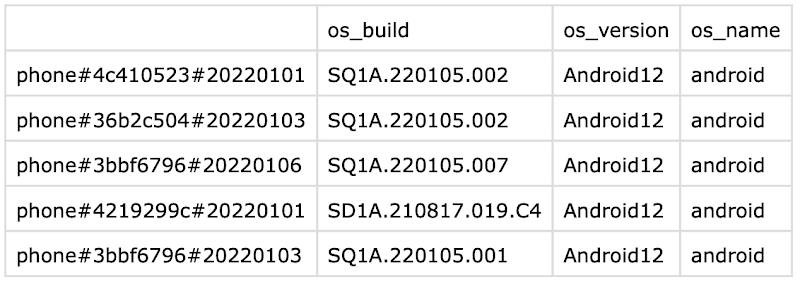
 

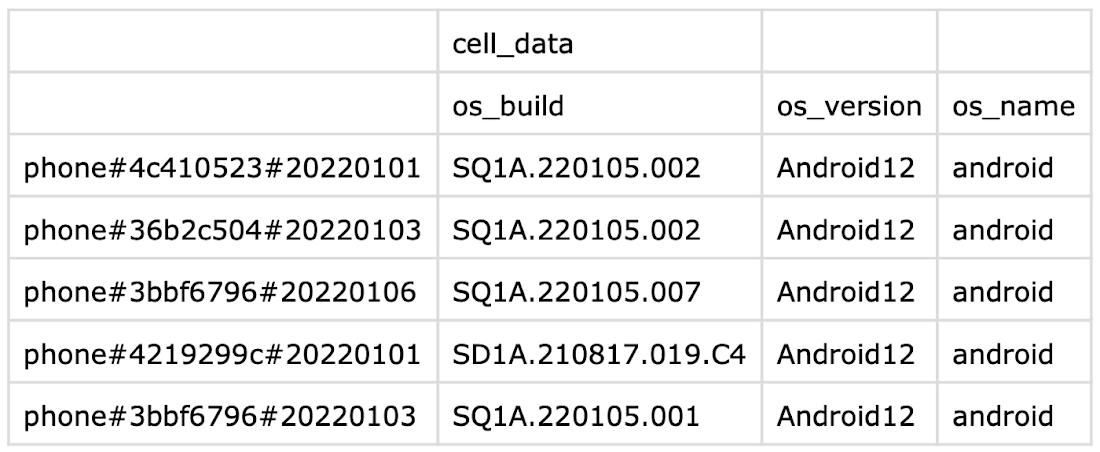
CSV file without column families


CSV file with column families


The CSV file uses one row of headers specifying the column qualifiers and a blank for the rowkey. You can add an additional row of headers for the column families and then remove the column-family argument from the import command.

I hope this tool helps you get comfortable with Bigtable and can let you experiment with it more easily. Get started with Bigtable and the cbt command line with the Quickstart guide.


By: Billy Jacobson (Developer Advocate, Cloud Bigtable)
Source: Google Cloud Blog


For enquiries, product placements, sponsorships, and collaborations, connect with us at [email protected]. We'd love to hear from you!

Our humans need coffee too! Your support is highly appreciated, thank you!

aster.cloud

Related Topics
  • Bigtable
  • CSV
  • Databases
  • Google Cloud
  • Tutorial
You May Also Like
View Post
  • Data
  • Technology

Synthetic data could ease people’s concerns about privacy breaches. But who gets to create it?

  • September 15, 2026
Data center
View Post
  • Data
  • Public Cloud

Data Sovereignty in Spain. It’s Not Just About the Law, It’s About Efficiency

  • June 3, 2026
View Post
  • Data
  • Platforms
  • Technology

Scaling cloud and AI: Microsoft Azure’s commitment to Europe’s digital future

  • May 11, 2026
View Post
  • Data

Streamline read scalability with Cloud SQL autoscaling read pools

  • March 23, 2026
View Post
  • Data
  • Platforms
  • Public Cloud

PayPal’s historically large data migration is the foundation for its gen AI innovation

  • March 4, 2026
View Post
  • Data
  • Technology

3 obstacles to agentic AI adoption and how to overcome them

  • December 22, 2025
Points, Lines and a Question
View Post
  • Architecture
  • Design
  • Engineering
  • People

What Is The Point In Making Points?

  • November 26, 2025
View Post
  • Engineering
  • Software Engineering

Development gets better with Age

  • October 9, 2025

Stay Connected!
LATEST
  • 1
    Apple unveils groundbreaking MacBook Pro with PROLED XDR Display and Touch for the first time on Mac
    • October 28, 2026
  • 2
    Apple introduces the new 14‑inch MacBook Pro with M6
    • October 27, 2026
  • 3
    Apple unveils new iMac with M6, delivering a major boost in performance and AI capabilities
    • October 27, 2026
  • 4
    IBM and Siemens Collaborate on Research to Advance Nanostack Architecture
    • October 14, 2026
  • 5
    Chinese tech giant Huawei unveils Mate 90 series smartphones with flagship Tau chips adopting logic folding technology
    • October 2, 2026
  • 6
    IBM Acquires Logiq Consulting to Expand Secure Digital Transformation and Cybersecurity Capabilities in the UK
    • September 24, 2026
  • 7
    Accenture and Google Cloud Transform Software Development with Volvo Cars
    • September 22, 2026
  • 8
    Synthetic data could ease people’s concerns about privacy breaches. But who gets to create it?
    • September 15, 2026
  • 9
    Apple Flagship Hardware Launch for September 2026
    • September 10, 2026
  • 10
    Multi-cloud with AWS and Azure just got a whole lot easier thanks to a new interconnect service
    • September 2, 2026
about
Hello World!

We are aster.cloud. We’re created by programmers for programmers.

Our site aims to provide guides, programming tips, reviews, and interesting materials for tech people and those who want to learn in general.

We would like to hear from you.

If you have any feedback, enquiries, or sponsorship request, kindly reach out to us at:

[email protected]
Most Popular
  • 1
    Broadcom eyes security, performance boosts with vDefend and Avi Load Balancer updates
    • August 7, 2026
  • Why real SaaS resilience means breaking free of the hyperscaler
    • August 11, 2026
  • Agentic AI is spurring a ‘fundamental shift’ in cloud infrastructure consumption
    • August 17, 2026
  • 4
    VMware targets ‘three core AI cost drivers’ with new Private AI Cloud service
    • September 2, 2026
  • 5
    Digital sovereignty in the age of AI: You don’t have to choose between control and innovation
    • August 10, 2026
  • /
  • Technology
  • Tools
  • About
  • Contact Us

Input your search keywords and press Enter.